
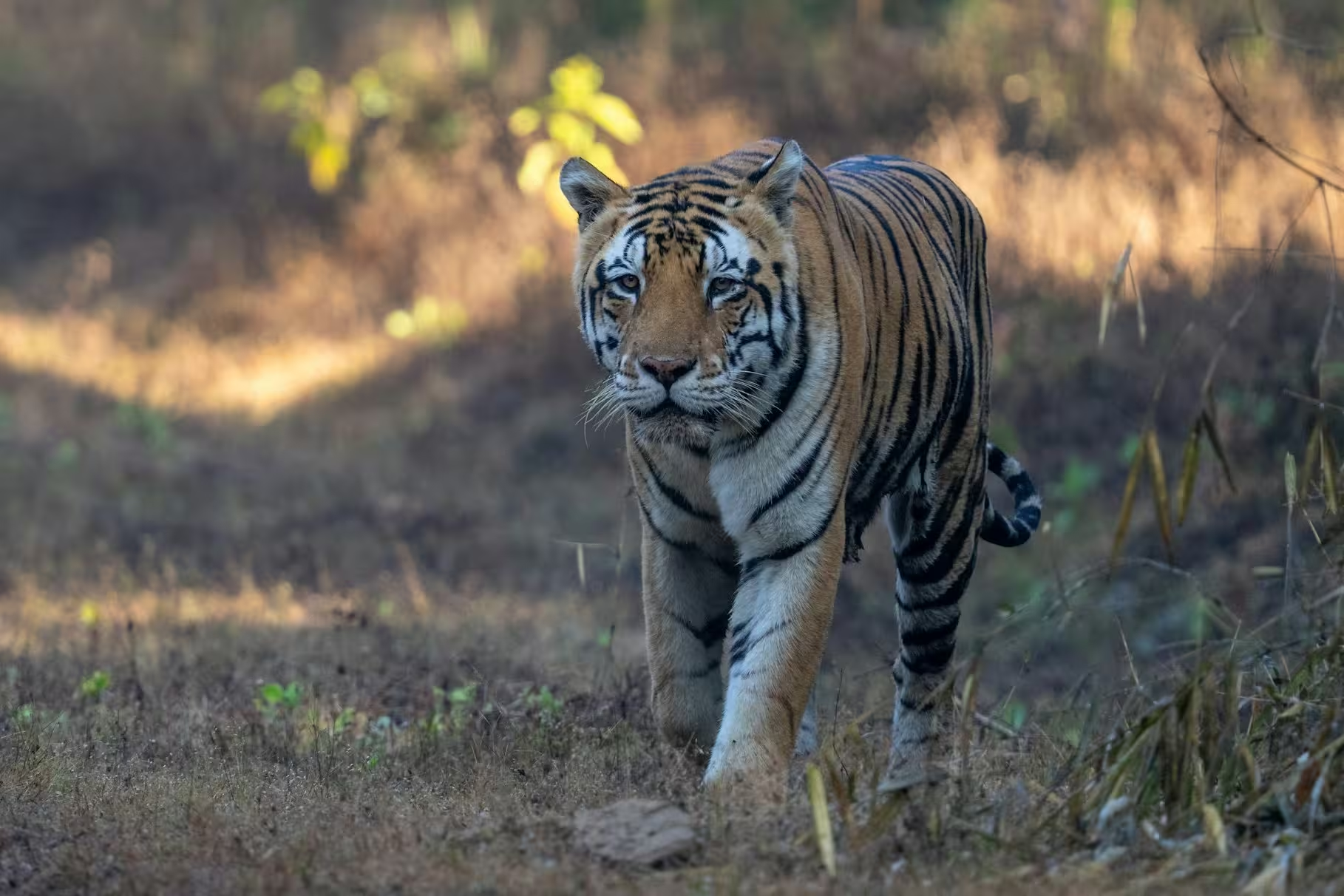
India is home to the world's largest population of wild tigers. Its tiger reserves protect some of the country's most important forests, grasslands, wetlands and wildlife corridors.
According to the All India Tiger Estimation 2022, India's tiger population was estimated at 3,682 animals, with a range of 3,167 to 3,925. The assessment also showed major differences in tiger abundance between individual reserves.
Among individual tiger reserves, Corbett recorded the highest tiger abundance, followed by Bandipur, Nagarhole, Bandhavgarh, Dudhwa, Mudumalai and Kanha.
These reserves span very different landscapes. Corbett lies in the Himalayan foothills, Bandipur and Nagarhole form part of the Western Ghats landscape, while Bandhavgarh and Kanha represent the forests of central India.
For wildlife travellers, tiger numbers are useful but they do not tell the whole story. Habitat quality, prey availability, forest structure, water, safari zones and tiger behaviour also influence what visitors experience in the field.
Here are the top seven tiger reserves in India by tiger abundance, based on the 2022 national assessment.
Top 7 Tiger Reserves in India by Tiger Population
| Rank | Tiger Reserve | State | Tiger Abundance |
| 1 | Corbett Tiger Reserve | Uttarakhand | 260 |
| 2 | Bandipur Tiger Reserve | Karnataka | 150 |
| 3 | Nagarhole Tiger Reserve | Karnataka | 141 |
| 4 | Bandhavgarh Tiger Reserve | Madhya Pradesh | 135 |
| 5 | Dudhwa Tiger Reserve | Uttar Pradesh | 135 |
| 6 | Mudumalai Tiger Reserve | Tamil Nadu | 114 |
| 7 | Kanha Tiger Reserve | Madhya Pradesh | 105 |
The figures above are the tiger abundance within the Tiger Reserve reported in the detailed 2022 assessment release. Corbett ranked first with 260, followed by Bandipur with 150 and Nagarhole with 141.
A note about tiger population figures
You may find different Corbett figures in government documents. This happens because tiger estimation uses spatial models and considers tiger movements beyond administrative boundaries.
The detailed status report, for example, discusses a broader estimate of 319 tigers for Corbett using a different spatial framework. The government release presenting reserve abundance lists 260 within the reserve.
For a like-for-like ranking in this article, we use the reserve abundance figures published by the Government of India.
1. Corbett Tiger Reserve, Uttarakhand
Tiger abundance: 260
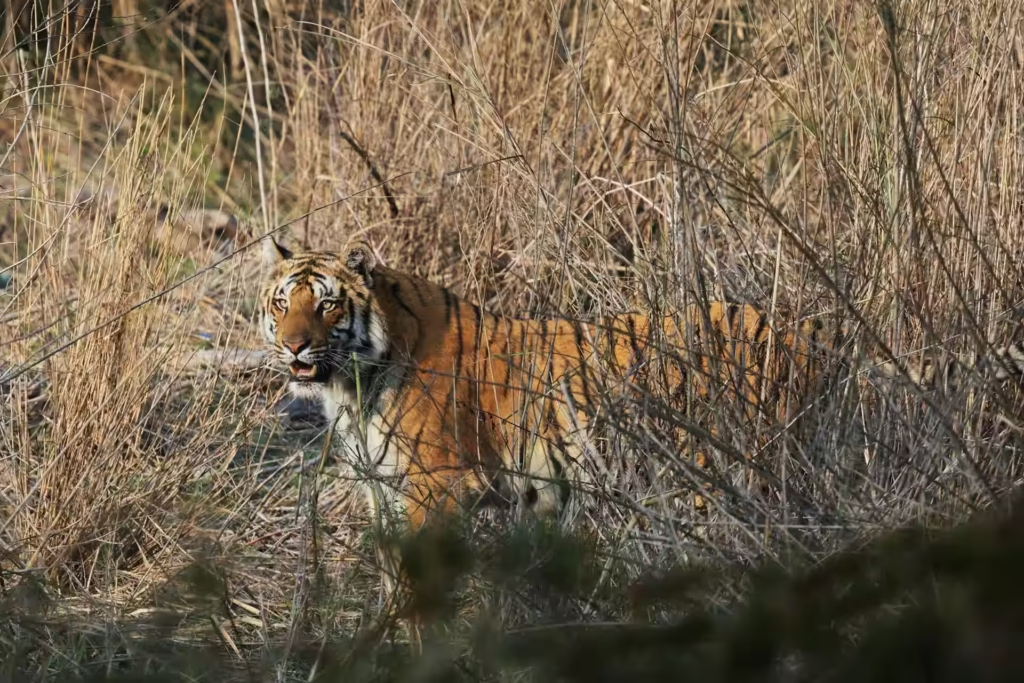
Corbett Tiger Reserve has the highest tiger abundance among India's Tiger Reserves in the 2022 national assessment.
Located in Uttarakhand, Corbett protects a diverse landscape of sal forests, grasslands, riverine habitats and hills. The reserve is part of the Shivalik Hills and Gangetic Plains tiger landscape.
Corbett was also one of the original landscapes associated with Project Tiger. Its tiger habitat remains important well beyond the boundaries of the reserve because wildlife moves through connected forests and surrounding landscapes.
The reserve covers more than 1,288 sq km, including its core and buffer areas listed by the National Tiger Conservation Authority.
Why is Corbett important for tigers?
Corbett combines extensive forest habitat with grasslands and river systems that support a substantial prey base. These conditions help maintain a large tiger population.
Its location also gives it importance within the wider Himalayan foothill landscape. Maintaining connectivity between protected forests is essential because tigers do not remain within fixed administrative boundaries.
Corbett for a tiger safari
Corbett offers a different safari experience from the dry forests of central India.
Visitors can encounter tigers around forest tracks, grasslands and riverine habitats. The landscape also supports elephants, leopards, deer, wild boar and many bird species.
A Corbett safari is therefore about more than finding a tiger. The surrounding Himalayan foothill ecosystem adds considerable variety to the experience.
Best suited for: Travellers who want tiger sightings combined with Himalayan foothill landscapes, elephants and birdlife.
2. Bandipur Tiger Reserve, Karnataka
Tiger abundance: 150
Bandipur Tiger Reserve ranks second among India's tiger reserves by tiger abundance, with an estimated 150 tigers in the 2022 assessment.
Bandipur lies in Karnataka and forms part of one of India's most important connected tiger landscapes.
The reserve is linked ecologically with neighbouring protected areas, including Nagarhole and other forests of the Nilgiri landscape. This connectivity allows wildlife to move across a much larger ecosystem.
The National Tiger Conservation Authority lists Bandipur's total reserve area at about 1,456 sq km, including core and buffer areas.
Why is Bandipur important?
Bandipur has a strong combination of forest habitat and prey species. Its dry and moist deciduous forests create suitable conditions for tigers and other large mammals.
The wider landscape is particularly important because tiger conservation does not depend only on one protected area. Connected forests help maintain genetic exchange and allow young tigers to disperse.
The NTCA identifies the larger Nagarhole-Bandipur-Mudumalai-Wayanad-Moyar-Segur landscape as one of India's viable tiger landscapes.
Bandipur for a tiger safari
Bandipur is a strong choice for travellers who want to combine tiger viewing with a broader South Indian wildlife experience.
The reserve also supports elephants, leopards, gaur, dhole and several deer species.
For international visitors, Bandipur can work especially well as part of a wider Karnataka wildlife itinerary.
Best suited for: Travellers looking for tigers, elephants and a connected Western Ghats wildlife landscape.
3. Nagarhole Tiger Reserve, Karnataka
Tiger abundance: 141
Nagarhole Tiger Reserve recorded an estimated 141 tigers in the 2022 assessment. It ranks third among India's tiger reserves by reserve-level tiger abundance.
Located in Karnataka, Nagarhole is another major part of the connected Western Ghats tiger landscape.
The reserve contains forests, open areas, streams and water bodies that support a rich prey base. Its connection with Bandipur adds further importance to the landscape.
The NTCA lists Nagarhole's total reserve area at about 1,206 sq km, including its core and buffer areas.
Why is Nagarhole important for tigers?
Nagarhole's greatest conservation strength is its position within a larger connected ecosystem.
Tigers, elephants and other large mammals can move between neighbouring forests. Such connectivity supports dispersal and helps maintain viable populations.
The NTCA specifically identifies the Nagarhole-Bandipur-Mudumalai-Wayanad-Moyar-Segur landscape as one of the country's viable tiger landscapes.
Nagarhole for a tiger safari
Nagarhole is well suited to travellers who want a varied wildlife experience rather than a tiger-only trip.
The reserve is known for its elephants, gaur, deer, wild dogs and birdlife as well as tigers.
Combining Nagarhole with Bandipur can provide a broader view of the Nilgiri landscape and its wildlife.
Best suited for: Wildlife travellers who want tigers within a diverse Western Ghats ecosystem.
4. Bandhavgarh Tiger Reserve, Madhya Pradesh
Tiger abundance: 135
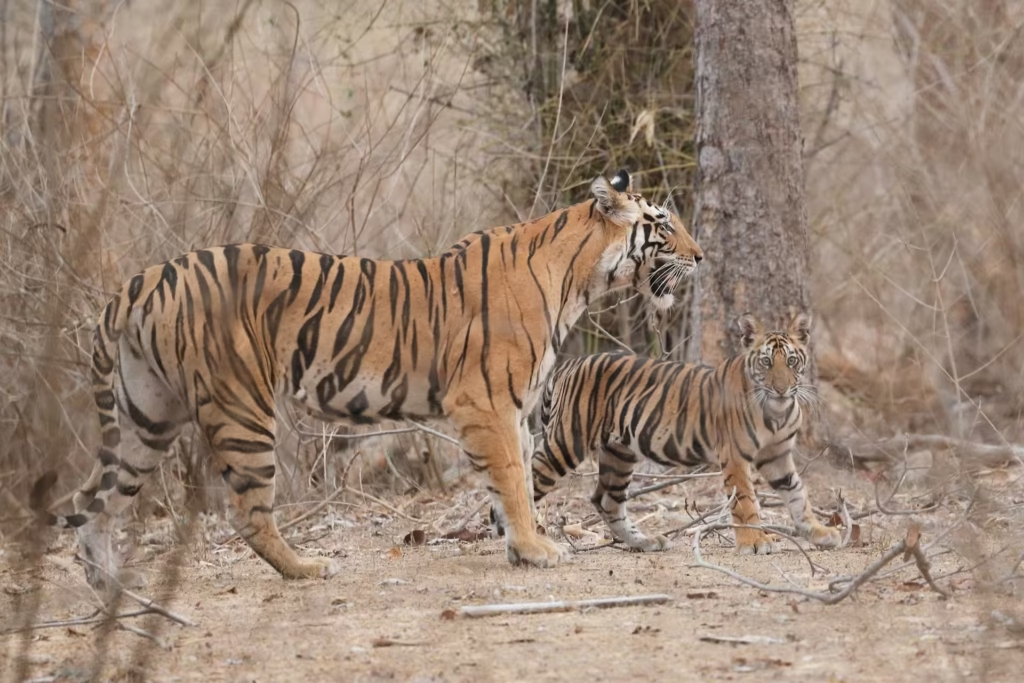
Bandhavgarh Tiger Reserve recorded an estimated 135 tigers in the 2022 national assessment. It shares fourth place with Dudhwa based on reserve-level tiger abundance.
Located in Madhya Pradesh, Bandhavgarh has become one of India's best-known tiger safari destinations.
Its reputation comes partly from the opportunity to encounter tigers in a relatively accessible landscape. However, tiger sightings are never guaranteed in the wild.
Why is Bandhavgarh important?
Bandhavgarh supports a strong tiger population within the central Indian landscape.
The reserve includes forests, grasslands and hills. These habitats provide cover and support prey species needed by tigers.
Its conservation importance also extends beyond tourism. Like other tiger reserves, Bandhavgarh forms part of a larger network of protected forests and wildlife corridors.
Bandhavgarh for a tiger safari
Bandhavgarh is particularly attractive to travellers whose main goal is to photograph and observe tigers.
The landscape can offer excellent visibility in some areas, especially when vegetation becomes less dense during the warmer months.
However, responsible safari planning should focus on the overall wildlife experience rather than promising sightings.
Tigers move freely, rest during hot periods and may spend time in dense cover. Even in a reserve with a strong population, every safari is different.
Best suited for: First-time tiger safari travellers and photographers seeking a classic central Indian tiger experience.
5. Dudhwa Tiger Reserve, Uttar Pradesh
Tiger abundance: 135
Dudhwa Tiger Reserve recorded an estimated 135 tigers, placing it alongside Bandhavgarh in fourth position in the 2022 reserve-level ranking.
Dudhwa lies in Uttar Pradesh's Terai landscape near the Nepal border.
Its habitat differs considerably from the dry forests commonly associated with central Indian tiger reserves.
The reserve includes forests, wetlands and extensive grasslands. This combination supports tigers as well as several other large mammals.
Why is Dudhwa important?
Dudhwa is an important part of the Terai Arc landscape.
Its grasslands and wetlands support species such as swamp deer and other herbivores. A strong prey base is essential for maintaining tiger populations.
The reserve also has significance for species beyond tigers. Its varied habitats support Asian elephants, one-horned rhinoceros, swamp deer and rich birdlife.
Dudhwa for a tiger safari
Dudhwa offers a different experience from reserves such as Bandhavgarh and Kanha.
The Terai landscape has a distinctive combination of tall grass, forests and wetlands. Wildlife viewing here can therefore feel more expansive and less like the dry deciduous forests of central India.
For travellers interested in India's less predictable and less crowded wildlife landscapes, Dudhwa can be an interesting choice.
Best suited for: Experienced wildlife travellers who want tigers in a distinctive Terai ecosystem.
6. Mudumalai Tiger Reserve, Tamil Nadu
Tiger abundance: 114
Mudumalai Tiger Reserve recorded an estimated 114 tigers in the 2022 assessment.
Located in Tamil Nadu, Mudumalai forms an important part of the Nilgiri landscape.
It is connected to neighbouring wildlife habitats in Karnataka and Kerala. These connections make the larger landscape important for elephants, tigers and other wildlife.
The NTCA lists Mudumalai's total notified area at about 689 sq km, including core and buffer areas.
Why is Mudumalai important?
Mudumalai demonstrates why tiger conservation should be viewed at the landscape level.
Its tiger population does not exist in isolation. The surrounding forests create opportunities for wildlife movement across state boundaries.
This connected ecosystem is one reason the NTCA considers the broader Nagarhole-Bandipur-Mudumalai-Wayanad-Moyar-Segur landscape viable for long-term tiger survival.
Mudumalai for a tiger safari
Mudumalai is particularly interesting for travellers who want to experience the wildlife of the Nilgiri landscape.
Tigers share the forest with elephants, leopards, gaur, deer and other species.
The reserve can also be combined with neighbouring South Indian wildlife destinations to create a longer wildlife itinerary.
Best suited for: Travellers interested in South India's connected tiger and elephant landscapes.
7. Kanha Tiger Reserve, Madhya Pradesh
Tiger abundance: 105
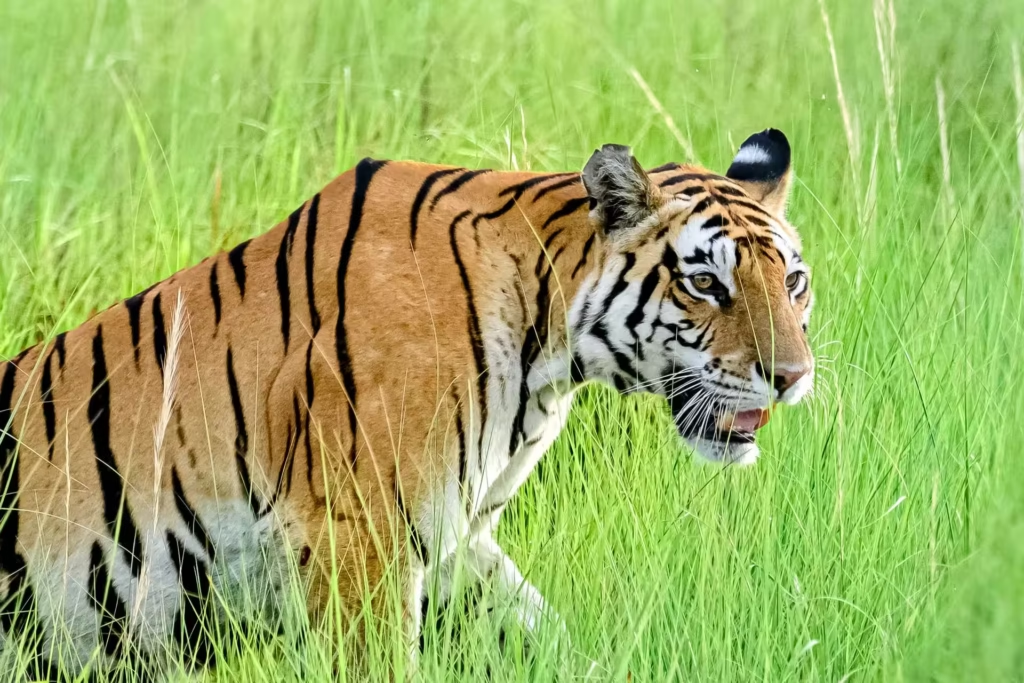
Kanha Tiger Reserve recorded an estimated 105 tigers in the 2022 assessment, placing it seventh among the top tiger reserves in India by reserve-level tiger abundance.
Kanha is one of India's most recognised wildlife destinations.
Located in Madhya Pradesh, the reserve protects a large landscape of sal and mixed deciduous forests, meadows and water sources.
The NTCA lists Kanha's total reserve area at more than 2,051 sq km, including core and buffer areas.
Why is Kanha important?
Kanha has long been recognised for its strong conservation programme and diverse wildlife.
Its forests support tigers alongside leopards, dhole, gaur, sambar, chital and other species.
The reserve is also particularly significant for hard-ground barasingha conservation.
Kanha for a tiger safari
Kanha offers one of the most complete wildlife safari experiences in central India.
Its open meadows can provide excellent opportunities to observe herbivores, while the surrounding forest provides habitat for tigers and predators.
For international travellers, Kanha can work particularly well when combined with Pench or Bandhavgarh.
Best suited for: Travellers who want a balanced central Indian safari with tigers, diverse wildlife and scenic forest landscapes.
Tiger Reserves Just Outside the Top 7
The 2022 assessment also recorded substantial tiger populations in several other reserves.
| Rank | Tiger Reserve | State | Tiger Abundance |
| 8 | Kaziranga | Assam | 104 |
| 9 | Sundarbans | West Bengal | 100 |
| 10 | Tadoba-Andhari | Maharashtra | 97 |
| 11 | Sathyamangalam | Tamil Nadu | 85 |
| 12 | Pench-Madhya Pradesh | Madhya Pradesh | 77 |
These figures show why India's tiger safari options extend far beyond the seven reserves at the top of the ranking.
Kaziranga, for example, offers a very different wildlife experience because of its floodplain grasslands and wetlands.
The Sundarbans are even more distinctive, with tigers living in a tidal mangrove ecosystem.
Tadoba has become particularly popular among tiger photographers, while Pench offers an important central Indian forest experience.
Does a Higher Tiger Population Mean Better Tiger Sightings?
Not necessarily.
A reserve with more tigers does not automatically guarantee better sightings.
Tiger viewing depends on several factors, including:
- Tiger density
- Size and structure of the habitat
- Prey availability
- Water availability
- Vegetation
- Season
- Safari zone
- Individual tiger movements
- Weather conditions
- Time spent in the field
A tiger may be present in a reserve but remain hidden in dense vegetation.
Another tiger may spend several hours near a road or water source.
This is why population figures should be treated as an important conservation indicator rather than a safari guarantee.
For travellers, the better question is often:
Which tiger reserve best matches the kind of wildlife experience I want?
Which Tiger Reserve Is Best for Tiger Sightings?
There is no single answer for every traveller.
Bandhavgarh has a strong reputation for tiger-focused safaris and is a popular choice for first-time visitors.
Corbett offers a different experience, with tigers living in a Himalayan foothill ecosystem alongside elephants and rich birdlife.
Kanha combines tiger viewing with beautiful central Indian forests and diverse wildlife.
Tadoba is another important choice for travellers focused on tiger photography, despite ranking tenth in the 2022 abundance table.
Pench offers a quieter central Indian experience and works particularly well as part of a multi-park itinerary.
The best reserve depends on your travel dates, number of safari days, preferred landscape and other wildlife interests.
Best Tiger Reserves in India for International Travellers
International visitors often want more than a single tiger sighting.
They may also want comfortable accommodation, experienced naturalists, good logistics and enough safari time to understand the landscape.
For a classic central Indian itinerary, Kanha, Bandhavgarh and Pench can work well together.
For South India, Bandipur, Nagarhole and Mudumalai form part of a remarkable connected wildlife landscape.
For a Himalayan foothill experience, Corbett offers a very different setting.
For travellers seeking a less conventional route, Dudhwa can provide a distinctive Terai experience.
The important point is to plan around the landscape rather than simply selecting the reserve with the highest number of tigers.
Why Tiger Corridors Matter
Tigers need more than protected core areas.
Young tigers often disperse from the areas where they were born. They may travel through buffer forests and corridors before establishing new territories.
This makes habitat connectivity essential to long-term conservation.
The NTCA notes that buffer areas and forest connectivity are important for tiger dynamics. Young adults, transients and other tigers use these areas as part of normal population movement.
India's tiger reserves therefore need to be viewed as parts of larger landscapes.
Bandipur and Nagarhole are a good example.
So are the connected forests around Mudumalai.
Central Indian reserves such as Kanha, Pench and Bandhavgarh also depend on wider habitat connectivity.
Protecting these connections helps tigers move, disperse and maintain genetically viable populations.
How Many Tigers Are There in India?
The 2022 national assessment estimated India's tiger population at 3,682, with an estimated range of 3,167 to 3,925.
The estimate represented a substantial increase from earlier national assessments.
India's estimated tiger population was:
| Year | Estimated Tiger Population |
| 2006 | 1,411 |
| 2010 | 1,706 |
| 2014 | 2,226 |
| 2018 | 2,967 |
| 2022 | 3,682 |
The national assessment is conducted every four years using a scientific monitoring framework involving the Wildlife Institute of India, tiger range states and other conservation organisations.
India now has 58 notified Tiger Reserves across 18 states, according to the National Tiger Conservation Authority.
These reserves are not simply tourism destinations. They are core parts of India's long-term strategy to protect tigers and the ecosystems that support them.
Why Tiger Population Matters for Conservation
A large tiger population can indicate that a landscape has suitable habitat, sufficient prey and effective protection.
But population numbers need context.
Tigers require large territories and healthy prey populations. They also need safe movement between suitable habitats.
Conservation therefore involves much more than counting individual animals.
It includes habitat protection, anti-poaching work, prey management, scientific monitoring and reducing human-wildlife conflict.
The 2022 assessment also highlighted the need for stronger protection, habitat restoration, improved prey populations and better connectivity in several tiger reserves.
This makes every tiger reserve important, even when its population does not place it near the top of the national ranking.
Frequently Asked Questions About Tiger Reserves in India
Which tiger reserve has the highest tiger population in India?
Corbett Tiger Reserve in Uttarakhand had the highest reserve-level tiger abundance in the 2022 national assessment, with 260 tigers reported within the reserve. The assessment also uses broader spatial estimates, which can produce different figures for the same landscape.
Which are the top seven tiger reserves in India by tiger population?
The top seven based on the 2022 reserve-level abundance figures are Corbett, Bandipur, Nagarhole, Bandhavgarh, Dudhwa, Mudumalai and Kanha. Corbett ranked first with 260 tigers, while Kanha ranked seventh with 105.
Which state has the highest tiger population in India?
Madhya Pradesh recorded India's highest state-level tiger population in the 2022 assessment, with an estimated 785 tigers. Karnataka followed with 563 and Uttarakhand with 560.
Is Bandhavgarh the best tiger reserve in India?
Bandhavgarh is one of India's best-known tiger safari destinations, but there is no single best reserve for every traveller. Sightings depend on season, safari zone, habitat, tiger movements and time spent in the field. Bandhavgarh is particularly attractive for travellers focused on tiger photography and sightings.
Which tiger reserve is best for a first tiger safari?
Bandhavgarh, Kanha, Pench, Corbett and Tadoba are all strong choices for a first tiger safari. The right choice depends on your travel dates, preferred landscape, accommodation preferences and whether you want to combine tiger viewing with other wildlife.
How many tigers are there in India?
India's 2022 national tiger assessment estimated 3,682 tigers, with a range of 3,167 to 3,925. India conducts its national tiger assessment every four years.
Which tiger reserve has 100 or more tigers?
The 2022 assessment recorded 100 or more tigers in several reserves, including Corbett, Bandipur, Nagarhole, Bandhavgarh, Dudhwa, Mudumalai, Kanha, Kaziranga and the Sundarbans. Tadoba and other reserves were close behind.
Is tiger population the same as tiger density?
No. Population is the estimated number of tigers in a defined area, while density describes how many tigers occur within a given area, usually expressed per unit of habitat. A smaller reserve can have fewer tigers overall but a higher tiger density.
Plan Your Tiger Safari in India
India offers far more than one way to experience a wild tiger.
You can track tigers through the sal forests of central India, explore the grasslands of the Terai, travel through the Himalayan foothills or experience the connected forests of the Western Ghats.
The seven reserves at the top of India's 2022 tiger abundance ranking provide a useful starting point, but the best safari depends on your interests and itinerary.
If your priority is tiger sightings, we can help you compare reserves based on season, safari availability and wildlife conditions.
If you want a broader experience, we can combine tiger reserves with birding, elephants, leopards, Indian wild dogs and other wildlife.
Explore our [tiger safari in India] options and plan a wildlife journey around the reserves that best match your interests.
Final Thoughts
India's tiger recovery is one of the country's most important wildlife conservation stories.
The 2022 assessment recorded 3,682 tigers nationally, with strong populations across several major landscapes. Corbett led the reserve-level ranking with 260 tigers, followed by Bandipur, Nagarhole, Bandhavgarh, Dudhwa, Mudumalai and Kanha.
Yet the real story goes beyond these numbers.
Tigers need connected forests, healthy prey populations and secure habitats. They also need protected corridors that allow populations to move between landscapes.
For travellers, these reserves offer an opportunity to experience some of India's finest wild places.
A tiger safari is not simply about finding a tiger. It is about entering a living ecosystem and understanding the forests that make its survival possible.