
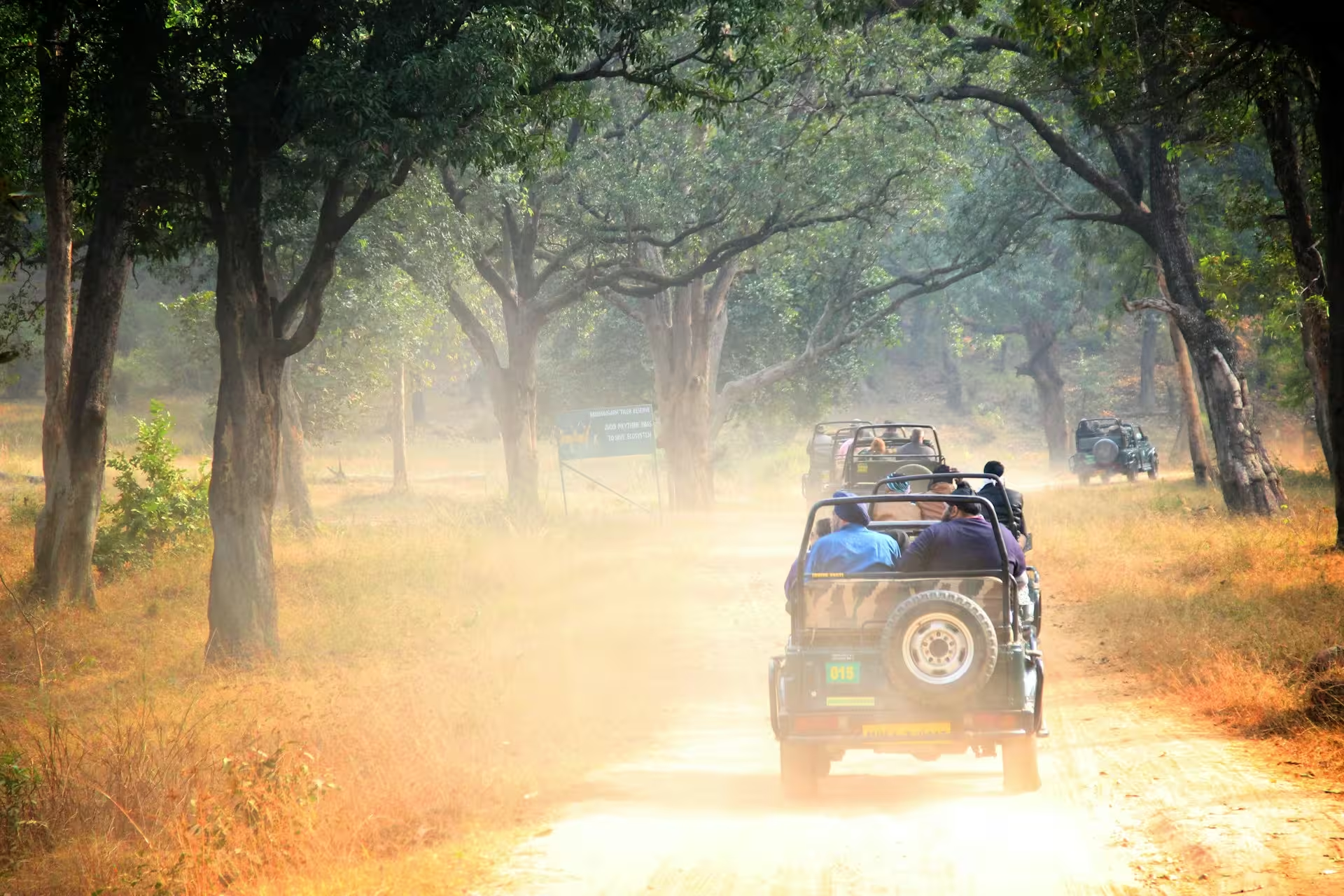
India has some of the richest wildlife and natural habitats in Asia. Its protected areas cover Himalayan mountains, high-altitude deserts, tropical forests, grasslands, wetlands, mangroves and marine habitats.
National Parks protect many of these important areas. They provide protected habitat for tigers, leopards, elephants, Asiatic lions, rhinoceroses, snow leopards, wild buffaloes, deer, crocodiles, birds and many other species.
India has 107 National Parks, spread across states and Union Territories from the Andaman and Nicobar Islands to Ladakh.
The latest additions to India's National Park network include Similipal National Park in Odisha and Sikhna Jwhwlao National Park in Assam. Odisha officially announced Similipal as India's 107th National Park in April 2025.
This guide provides the complete state-wise list of India's 107 National Parks. It also covers major wildlife species, famous tiger parks, the oldest and largest National Parks, and popular safari destinations.
How Many National Parks Are There in India?
India has 107 National Parks.
These National Parks protect many types of natural habitat. They include forests, grasslands, wetlands, mountains, coastal areas, islands and marine ecosystems.
Several parks are known for one particular species. Gir is famous for Asiatic lions. Kaziranga is famous for the greater one-horned rhinoceros. Hemis is known for snow leopards. Keibul-Lamjao is famous for the Sangai deer.
Many National Parks are major wildlife safari destinations. Corbett, Kanha, Bandhavgarh, Pench, Tadoba, Ranthambore, Panna, Satpura and Nagarahole are among India's best-known tiger safari parks.
Complete List of 107 National Parks in India
The following table gives the state and Union Territory-wise list of India's 107 National Parks.
| No. | State / Union Territory | National Parks |
| 1 | Andaman & Nicobar Islands | Campbell Bay, Galathea Bay, Mahatma Gandhi Marine, Mount Manipur, Rani Jhansi Marine, Saddle Peak |
| 2 | Andhra Pradesh | Papikonda, Rajiv Gandhi (Rameswaram), Sri Venkateswara |
| 3 | Arunachal Pradesh | Mouling, Namdapha |
| 4 | Assam | Dibru-Saikhowa, Dihing Patkai, Kaziranga, Manas, Nameri, Orang, Raimona, Sikhna Jwhwlao |
| 5 | Bihar | Valmiki |
| 6 | Chhattisgarh | Guru Ghasidas (Sanjay), Indravati (Kutru), Kanger Valley |
| 7 | Goa | Mollem |
| 8 | Gujarat | Blackbuck (Velavadar), Gir, Marine (Gulf of Kachchh), Vansda |
| 9 | Haryana | Kalesar, Sultanpur |
| 10 | Himachal Pradesh | Great Himalayan, Inderkilla, Khirganga, Pin Valley, Simbalbara |
| 11 | Jammu & Kashmir | City Forest (Salim Ali), Dachigam, Kazinag, Kishtwar |
| 12 | Jharkhand | Betla |
| 13 | Karnataka | Anshi, Bandipur, Bannerghatta, Kudremukh, Nagarahole |
| 14 | Kerala | Anamudi Shola, Eravikulam, Mathikettan Shola, Pambadum Shola, Periyar, Silent Valley |
| 15 | Ladakh | Hemis |
| 16 | Madhya Pradesh | Bandhavgarh, Dinosaur Fossils, Fossil, Kanha, Kuno, Madhav, Panna, Pench, Sanjay, Satpura, Van Vihar |
| 17 | Maharashtra | Chandoli, Gugamal, Nawegaon, Pench, Sanjay Gandhi, Tadoba-Andhari |
| 18 | Manipur | Keibul-Lamjao, Shirui |
| 19 | Meghalaya | Balphakram, Nokrek Ridge |
| 20 | Mizoram | Murlen, Phawngpui (Blue Mountain) |
| 21 | Nagaland | Intanki |
| 22 | Odisha | Bhitarkanika, Similipal |
| 23 | Rajasthan | Desert, Keoladeo Ghana, Mukundra Hills, Ranthambore, Sariska |
| 24 | Sikkim | Khangchendzonga |
| 25 | Tamil Nadu | Guindy, Gulf of Mannar Marine, Indira Gandhi (Anamalai), Mudumalai, Mukurthi |
| 26 | Telangana | Kasu Brahmananda Reddy, Mahavir Harina Vanasthali, Mrugavani |
| 27 | Tripura | Bison (Rajbari), Clouded Leopard |
| 28 | Uttar Pradesh | Dudhwa |
| 29 | Uttarakhand | Corbett, Gangotri, Govind, Nanda Devi, Rajaji, Valley of Flowers |
| 30 | West Bengal | Buxa, Gorumara, Jaldapara, Neora Valley, Singalila, Sundarbans |
National Parks in India State Wise
Andaman and Nicobar Islands
The Andaman and Nicobar Islands have six National Parks.
- Campbell Bay National Park
- Galathea Bay National Park
- Mahatma Gandhi Marine National Park
- Mount Manipur National Park
- Rani Jhansi Marine National Park
- Saddle Peak National Park
These islands protect tropical forests, coral reefs, mangroves and marine habitats. They support many species found only in island ecosystems.
Mount Manipur was formerly known as Mount Harriet National Park. The park protects forest habitat on South Andaman Island.
Andhra Pradesh
Andhra Pradesh has three National Parks.
- Papikonda National Park
- Rajiv Gandhi (Rameswaram) National Park
- Sri Venkateswara National Park
Papikonda protects forest areas along the Godavari River. Its forests support several mammals, reptiles and bird species.
Sri Venkateswara National Park protects an important section of the Eastern Ghats. The park contains dry deciduous forests, scrub areas and rocky terrain.
Arunachal Pradesh
Arunachal Pradesh has two National Parks.
- Mouling National Park
- Namdapha National Park
Namdapha is one of India's richest protected areas for wildlife. Its elevation ranges from lowland forests to high mountain areas.
The park supports species from both Himalayan and Southeast Asian habitats. Tigers, leopards, clouded leopards, hoolock gibbons and several rare birds occur in the wider region.
Mouling National Park protects forested mountain areas in eastern Arunachal Pradesh. It supports elephants, tigers, clouded leopards and several Himalayan bird species.
Assam
Assam has eight National Parks.
- Dibru-Saikhowa National Park
- Dihing Patkai National Park
- Kaziranga National Park
- Manas National Park
- Nameri National Park
- Orang National Park
- Raimona National Park
- Sikhna Jwhwlao National Park
Assam is one of India's most important states for wildlife conservation.
Kaziranga is famous for the greater one-horned rhinoceros. The park also supports tigers, elephants, wild water buffaloes, swamp deer and many bird species.
Manas is another major wildlife area. It supports tigers, elephants, rhinoceroses, wild buffaloes and several rare species.
Sikhna Jwhwlao is located in the BTR region of western Assam. The park protects forest habitat that supports elephants, tigers and other wildlife.
Bihar
Bihar has one National Park.
- Valmiki National Park
Valmiki lies in West Champaran along the Nepal border. It forms part of the Terai ecosystem and provides important habitat for tigers and other wildlife.
The park is Bihar's main tiger habitat. It also supports leopards, sloth bears, elephants, deer, wild boar and several bird species.
Chhattisgarh
Chhattisgarh has three National Parks.
- Guru Ghasidas (Sanjay) National Park
- Indravati (Kutru) National Park
- Kanger Valley National Park
Kanger Valley is known for its caves, forests and rich wildlife. The park contains several limestone caves and important forest habitats.
Indravati National Park protects large areas of forest in southern Chhattisgarh. It is known for wild buffalo and other central Indian species.
Guru Ghasidas National Park protects forest habitat in northern Chhattisgarh. The park also forms part of a wider wildlife corridor.
Goa
Goa has one National Park.
- Mollem National Park
Mollem lies in the Western Ghats and protects tropical forest habitat.
The park supports gaur, sambar, wild boar, barking deer, Malabar giant squirrels, several reptiles and many bird species.
Gujarat
Gujarat has four National Parks.
- Blackbuck (Velavadar) National Park
- Gir National Park
- Marine National Park, Gulf of Kachchh
- Vansda National Park
Gir is India's most important natural habitat for the Asiatic lion.
The park also supports leopards, chital, sambar, nilgai, wild boar, crocodiles and many bird species.
Blackbuck National Park at Velavadar protects open grassland. It is famous for blackbuck and also supports wolves, striped hyenas, jackals and several grassland birds.
Marine National Park in the Gulf of Kachchh protects coral reefs, mangroves, mudflats and marine species.
Haryana
Haryana has two National Parks.
- Kalesar National Park
- Sultanpur National Park
Kalesar protects forest habitat in the Shivalik foothills. The park supports leopards, elephants, sambar, chital and several bird species.
Sultanpur is known for its wetland habitat. It attracts many migratory birds during the winter months.
Himachal Pradesh
Himachal Pradesh has five National Parks.
- Great Himalayan National Park
- Inderkilla National Park
- Khirganga National Park
- Pin Valley National Park
- Simbalbara National Park
These parks protect alpine meadows, high-altitude valleys and Himalayan forests.
Great Himalayan National Park is a UNESCO World Heritage Site. It supports species such as the Himalayan tahr, snow leopard, blue sheep and Himalayan brown bear.
Pin Valley has a cold desert environment. It supports snow leopards, Siberian ibex and other high-altitude species.
Jammu and Kashmir
Jammu and Kashmir has four National Parks.
- City Forest (Salim Ali) National Park
- Dachigam National Park
- Kazinag National Park
- Kishtwar National Park
Dachigam is famous for the endangered Hangul, also called the Kashmir stag.
The park lies near Srinagar and protects forests, grasslands and mountain habitat.
Kishtwar National Park covers rugged Himalayan terrain. It supports Himalayan black bears, brown bears, leopards and several high-altitude species.
Jharkhand
Jharkhand has one National Park.
- Betla National Park
Betla lies within the Palamau region. It protects sal forests, grasslands and several water bodies.
The park supports elephants, gaur, sambar, chital, wild boar, sloth bears and leopards.
Betla is one of the best-known wildlife destinations in Jharkhand.
Karnataka
Karnataka has five National Parks.
- Anshi National Park
- Bandipur National Park
- Bannerghatta National Park
- Kudremukh National Park
- Nagarahole National Park
Bandipur and Nagarahole are among India's leading tiger and elephant habitats.
Both parks form part of the larger Nilgiri wildlife region. The surrounding protected areas include Mudumalai in Tamil Nadu and Wayanad in Kerala.
Anshi National Park forms part of the Kali Tiger Reserve. It protects evergreen forests and supports tigers, leopards, elephants, gaur and hornbills.
Kerala
Kerala has six National Parks.
- Anamudi Shola National Park
- Eravikulam National Park
- Mathikettan Shola National Park
- Pambadum Shola National Park
- Periyar National Park
- Silent Valley National Park
Eravikulam is famous for the endangered Nilgiri tahr. The park is also known for the flowering of Neelakurinji at long intervals.
Periyar is an important tiger and elephant habitat. Visitors can experience wildlife through jeep safaris, boat trips and guided nature activities.
Silent Valley protects one of Kerala's important rainforest ecosystems. It supports lion-tailed macaques, Nilgiri langurs and many endemic species.
Ladakh
Ladakh has one National Park.
- Hemis National Park
Hemis covers a large high-altitude area in eastern Ladakh.
The park is one of India's best-known areas for snow leopard tracking. It also supports Himalayan ibex, blue sheep, red foxes, Eurasian brown bears and several high-altitude birds.
Winter offers the best period for snow leopard expeditions. The animals often move towards lower elevations in search of prey.
Madhya Pradesh
Madhya Pradesh has 11 National Parks.
- Bandhavgarh National Park
- Dinosaur Fossils National Park
- Fossil National Park
- Kanha National Park
- Kuno National Park
- Madhav National Park
- Panna National Park
- Pench National Park
- Sanjay National Park
- Satpura National Park
- Van Vihar National Park
Madhya Pradesh is one of India's leading wildlife states.
Kanha, Bandhavgarh, Pench, Panna, Satpura and Sanjay are important tiger habitats.
Kanha is known for tigers, barasingha and rich sal forests. Bandhavgarh is famous for its high tiger density and historic fort.
Pench offers excellent tiger safari opportunities and shares its larger wildlife region with Maharashtra.
Panna is known for tiger conservation and its successful tiger population recovery.
Satpura offers a different safari experience. The park supports tigers, leopards, sloth bears, gaur, wild dogs and many other species.
Kuno has gained international attention through India's cheetah reintroduction programme.
For travellers planning a tiger safari in India, Madhya Pradesh offers several strong choices within one state.
Maharashtra
Maharashtra has six National Parks.
- Chandoli National Park
- Gugamal National Park
- Nawegaon National Park
- Pench National Park
- Sanjay Gandhi National Park
- Tadoba-Andhari National Park
Tadoba-Andhari is one of India's most popular tiger safari destinations.
The park is known for frequent tiger sightings, though sightings remain dependent on animal movement and safari conditions.
Pench National Park forms part of the larger Pench Tiger Reserve. The reserve extends across Maharashtra and Madhya Pradesh.
Sanjay Gandhi National Park is located within Mumbai. It protects a large forest area inside a major metropolitan region.
Manipur
Manipur has two National Parks.
- Keibul-Lamjao National Park
- Shirui National Park
Keibul-Lamjao is one of India's most unusual National Parks. It protects floating phumdis on Loktak Lake.
The park is famous for the Sangai, also known as the brow-antlered deer. The species is endemic to the region and has a very small natural range.
Shirui National Park is famous for the Shirui lily. The park protects forest and mountain habitat in the Ukhrul region.
Meghalaya
Meghalaya has two National Parks.
- Balphakram National Park
- Nokrek Ridge National Park
Balphakram protects forest and grassland habitat in the Garo Hills.
The park supports elephants, gaur, sambar, barking deer, wild boar and many bird species.
Nokrek Ridge protects an important forest area in the Garo Hills. It is known for its rich plant diversity and several rare wildlife species.
Mizoram
Mizoram has two National Parks.
- Murlen National Park
- Phawngpui (Blue Mountain) National Park
Murlen protects dense forest in eastern Mizoram near the Myanmar border.
Phawngpui protects the state's highest peak and surrounding forest. It supports serow, barking deer, leopards, clouded leopards and many birds.
Nagaland
Nagaland has one National Park.
- Intanki National Park
Intanki National Park protects tropical and subtropical forest in Nagaland.
The park supports hoolock gibbons, elephants, mithun, wild boar, deer and many bird species.
Its forests form part of the wider biodiversity region of northeastern India.
Odisha
Odisha has two National Parks.
- Bhitarkanika National Park
- Similipal National Park
Bhitarkanika is famous for mangrove forests, wetlands and saltwater crocodiles.
The park also supports spotted deer, wild boar, fishing cats, otters and many waterbirds.
Similipal was officially declared a National Park on April 24, 2025. Odisha described it as India's 107th National Park.
Similipal covers approximately 845.70 sq km. It already had recognition as a tiger reserve, biosphere reserve and elephant reserve.
The park is particularly known for its population of melanistic tigers. It protects forests, waterfalls, grasslands and several important wildlife habitats.
Rajasthan
Rajasthan has five National Parks.
- Desert National Park
- Keoladeo Ghana National Park
- Mukundra Hills National Park
- Ranthambore National Park
- Sariska National Park
Ranthambore is one of India's most famous tiger safari destinations.
The park is known for its dry forests, lakes, ancient fort and tiger sightings.
Sariska is another important tiger habitat in Rajasthan. The park supports leopards, striped hyenas, sambar, chital, nilgai and wild boar.
Keoladeo Ghana is one of India's most famous bird parks. Its wetlands attract many resident and migratory species.
Desert National Park protects the arid ecosystem of western Rajasthan. The Great Indian Bustard is one of its most important species.
Sikkim
Sikkim has one National Park.
- Khangchendzonga National Park
Khangchendzonga National Park protects a large Himalayan area around Mount Khangchendzonga.
The park contains glaciers, high-altitude lakes, alpine meadows and forests.
It supports snow leopards, red pandas, Himalayan black bears, blue sheep and many high-altitude birds.
The park forms part of the Khangchendzonga UNESCO World Heritage Site.
Tamil Nadu
Tamil Nadu has five National Parks.
- Guindy National Park
- Gulf of Mannar Marine National Park
- Indira Gandhi (Anamalai) National Park
- Mudumalai National Park
- Mukurthi National Park
Tamil Nadu's National Parks cover very different habitats.
Guindy protects forest habitat within Chennai. Gulf of Mannar protects marine ecosystems, coral reefs and coastal habitats.
Anamalai and Mudumalai protect important Western Ghats forests.
Mukurthi protects high-altitude grasslands and shola forests. It is an important habitat for the Nilgiri tahr.
Telangana
Telangana has three National Parks.
- Kasu Brahmananda Reddy National Park
- Mahavir Harina Vanasthali National Park
- Mrugavani National Park
These parks protect important pockets of natural habitat around Hyderabad and other parts of Telangana.
Mahavir Harina Vanasthali is known for blackbuck. Mrugavani supports several dry forest species and birdlife.
Kasu Brahmananda Reddy National Park protects forest habitat within Hyderabad.
Tripura
Tripura has two National Parks.
- Bison (Rajbari) National Park
- Clouded Leopard National Park
Clouded Leopard National Park is particularly important for the clouded leopard.
The species is one of Asia's most elusive wild cats. The park also supports leopards, barking deer, wild boar, primates and many birds.
Bison National Park protects forest habitat and supports gaur, deer, wild boar and several other species.
Uttar Pradesh
Uttar Pradesh has one National Park.
Dudhwa lies in the Terai region of northern Uttar Pradesh.
The park supports tigers, leopards, elephants, swamp deer, hog deer, sambar and several bird species.
Dudhwa is particularly known for its tall grasslands and wet forest habitat.
It forms part of a larger protected area complex that includes Kishanpur and Katarniaghat wildlife areas.
Uttarakhand
Uttarakhand has six National Parks.
- Corbett National Park
- Gangotri National Park
- Govind National Park
- Nanda Devi National Park
- Rajaji National Park
- Valley of Flowers National Park
Corbett is India's oldest National Park. It was established in 1936 as Hailey National Park.
The park is one of India's most popular tiger safari destinations. It supports tigers, leopards, elephants, sambar, chital and many bird species.
Nanda Devi and Valley of Flowers form part of a UNESCO World Heritage property.
Rajaji protects important elephant habitat in the Shivalik foothills.
Gangotri and Govind protect high-altitude Himalayan ecosystems and support several mountain species.
West Bengal
West Bengal has six National Parks.
- Buxa National Park
- Gorumara National Park
- Jaldapara National Park
- Neora Valley National Park
- Singalila National Park
- Sundarbans National Park
Sundarbans is famous for its mangrove forests and Royal Bengal Tigers.
The park protects one of the world's largest mangrove ecosystems. Its tigers have adapted to a tidal environment with rivers, creeks and mudflats.
Jaldapara is an important habitat for the greater one-horned rhinoceros. Gorumara also supports rhinoceroses, elephants, gaur and several deer species.
Singalila and Neora Valley protect high-altitude forests in northern West Bengal.
Which State Has the Most National Parks in India?
Madhya Pradesh has the highest number of National Parks, with 11 parks.
Its National Parks cover several types of habitat. They include tiger forests, grasslands, fossil sites and urban wildlife areas.
The state's main wildlife destinations include Kanha, Bandhavgarh, Pench, Panna, Satpura and Kuno.
This makes Madhya Pradesh one of India's strongest states for a multi-park wildlife trip.
Travellers planning a wildlife safari in India can combine two or more parks in Madhya Pradesh during one trip.
Which Is the Oldest National Park in India?
Corbett National Park in Uttarakhand is India's oldest National Park.
It was established in 1936 as Hailey National Park.
The park was later renamed after Jim Corbett, the famous hunter, naturalist and conservationist.
Corbett remains one of India's leading tiger habitats. It is known for tigers, elephants, leopards, deer and rich birdlife.
Which Is the Largest National Park in India?
Hemis National Park in Ladakh is generally recognised as India's largest National Park by area.
It covers approximately 3,350 sq km.
The park protects a vast high-altitude region with mountains, valleys and cold desert habitat.
Hemis is best known for snow leopards. It also supports Himalayan ibex, blue sheep, red foxes, brown bears and several high-altitude birds.
Which National Parks Are Best for Tiger Safaris?
India has many National Parks where travellers can look for wild tigers.
Some of the leading destinations include:
- Corbett National Park
- Kanha National Park
- Bandhavgarh National Park
- Pench National Park
- Tadoba-Andhari National Park
- Ranthambore National Park
- Panna National Park
- Satpura National Park
- Nagarahole National Park
- Bandipur National Park
- Kaziranga National Park
- Sariska National Park
- Dudhwa National Park
- Valmiki National Park
- Similipal National Park
Tiger sightings are never guaranteed in any National Park.
Wild tigers move freely through large forest areas. Their location changes with season, weather, prey movement and other conditions.
Travellers who want better chances can plan safaris across two or more parks.
Which National Park Is Famous for Asiatic Lions?
Gir National Park in Gujarat is India's most important National Park for Asiatic lions.
Gir supports the world's last wild population of the Asiatic lion.
The park also supports leopards, chital, sambar, nilgai, wild boar, crocodiles and many bird species.
Lion safaris in Gir offer a very different experience from tiger safaris in Central India.
Which National Park Is Famous for Rhinoceros?
Kaziranga National Park in Assam is India's best-known National Park for the greater one-horned rhinoceros.
The park supports one of the world's largest populations of this species.
Kaziranga is not only a rhino destination. It also supports tigers, elephants, wild water buffaloes, swamp deer and hundreds of bird species.
Other important rhino habitats include Manas, Orang and Jaldapara.
Which National Park Is Famous for Snow Leopards?
Hemis National Park in Ladakh is one of India's leading destinations for snow leopard sightings.
The species lives in the park's high-altitude mountain habitat.
Winter is the main season for snow leopard tracking. Animals often move towards lower elevations during this period as they follow prey.
Which National Park Is Famous for the Sangai Deer?
Keibul-Lamjao National Park in Manipur is famous for the Sangai, also known as the brow-antlered deer.
The park is located on Loktak Lake and protects floating phumdis.
The Sangai has a very small natural range. Keibul-Lamjao provides its most important protected habitat.
National Parks and Tiger Reserves
National Parks and Tiger Reserves are different protected-area categories.
A National Park protects an area with important ecological, floral, faunal or geographical features.
A Tiger Reserve is created under India's tiger conservation programme.
A Tiger Reserve can contain a National Park, Wildlife Sanctuary and other forest areas.
Kanha National Park forms part of Kanha Tiger Reserve. Bandhavgarh National Park forms part of Bandhavgarh Tiger Reserve.
This difference matters when planning a safari. A tiger reserve can cover a much larger area than the National Park with the same name.
Why Are National Parks Important?
National Parks protect some of India's most important wildlife habitats.
They help conserve:
- Tigers
- Leopards
- Asiatic lions
- Snow leopards
- Elephants
- Rhinoceroses
- Wild buffaloes
- Gaur
- Wild dogs
- Deer
- Crocodiles
- Primates
- Migratory birds
- Endemic species
- Forest ecosystems
- Grasslands
- Wetlands
- Mangroves
- Marine ecosystems
National Parks often form part of larger protected areas.
These areas can include Tiger Reserves, Wildlife Sanctuaries, Reserve Forests, Elephant Reserves and wildlife corridors.
Together, these protected areas give animals space to move, feed and reproduce.
They can protect water sources, breeding grounds and important forest habitats.
National Parks can support scientific research and wildlife monitoring. They can support local tourism and create jobs around protected areas.
Best National Parks in India for Wildlife Safaris
The best National Park depends on the animals and habitat you want to see.
| Wildlife experience | Recommended National Parks |
| Tiger safari | Kanha, Bandhavgarh, Pench, Corbett, Tadoba, Ranthambore |
| Asiatic lion | Gir |
| One-horned rhinoceros | Kaziranga, Manas, Orang, Jaldapara |
| Snow leopard | Hemis |
| Asian elephant | Corbett, Rajaji, Periyar, Bandipur, Nagarahole |
| Leopard | Ranthambore, Satpura, Pench |
| Wild buffalo | Kaziranga, Indravati |
| Sangai deer | Keibul-Lamjao |
| Nilgiri tahr | Eravikulam |
| Himalayan wildlife | Great Himalayan, Nanda Devi, Khangchendzonga |
| Marine wildlife | Gulf of Mannar, Marine National Park Gulf of Kachchh |
| Mangrove wildlife | Sundarbans, Bhitarkanika |
| Cheetah | Kuno |
Jawai is famous for leopard sightings, but it is not a National Park. It is a community and rocky hill wildlife area in Rajasthan.
For travellers focused on National Parks, Ranthambore, Satpura and Pench offer strong leopard viewing opportunities alongside other wildlife.
National Parks vs Wildlife Sanctuaries
National Parks and Wildlife Sanctuaries are different protected-area categories.
Both protect wildlife and natural habitat, but their legal status and management rules differ.
India has many Wildlife Sanctuaries that are important for wildlife tourism but do not appear in the National Park count.
Jawai, Bhadra, Chinnar, Ranganathittu and many other popular wildlife areas have different protected-area designations.
A list of India's National Parks should not include Wildlife Sanctuaries or Tiger Reserves unless the area also has National Park status.
This distinction helps travellers understand the type of protected area they are visiting.
Frequently Asked Questions About National Parks in India
How many National Parks are there in India?
India has 107 National Parks. They protect forests, grasslands, wetlands, mountains, mangroves, islands and marine habitats across the country.
Which state has the most National Parks in India?
Madhya Pradesh has the highest number, with 11 National Parks. Its major wildlife parks include Kanha, Bandhavgarh, Pench, Panna, Satpura and Kuno.
Which is the oldest National Park in India?
Corbett National Park in Uttarakhand is India's oldest National Park. It was established in 1936 as Hailey National Park.
Which is the largest National Park in India?
Hemis National Park in Ladakh is generally recognised as India's largest National Park by area. It covers approximately 3,350 sq km.
Which is the best National Park for tiger sightings?
No National Park guarantees tiger sightings. Kanha, Bandhavgarh, Pench, Tadoba, Corbett, Ranthambore and several other parks are popular choices for tiger safaris.
Which National Park is famous for Asiatic lions?
Gir National Park in Gujarat is the main natural habitat of the Asiatic lion.
Which National Park is famous for the one-horned rhinoceros?
Kaziranga National Park in Assam is internationally famous for its greater one-horned rhinoceros population.
Which National Park is famous for snow leopards?
Hemis National Park in Ladakh is one of India's best-known destinations for snow leopard sightings.
Which is India's newest National Park?
Similipal National Park in Odisha was officially declared a National Park on April 24, 2025. The Odisha government described it as India's 107th National Park.
Which National Park is famous for the Sangai deer?
Keibul-Lamjao National Park in Manipur is famous for the Sangai, or brow-antlered deer. It protects floating phumdis in Loktak Lake.
Final Thoughts
India's 107 National Parks protect a remarkable range of wildlife habitats.
The network includes tiger forests in Central India, rhino grasslands in Assam, mangroves in the Sundarbans, high-altitude habitats in Ladakh and marine ecosystems along India's coast.
Each park offers a different wildlife experience.
Tiger enthusiasts can focus on Madhya Pradesh, Maharashtra, Rajasthan, Uttarakhand and Karnataka. Rhino enthusiasts can choose Assam and West Bengal. Gir is the destination for Asiatic lions, and Ladakh offers some of India's best snow leopard experiences.
Similipal's addition to the National Park network in 2025 further increased India's protected-area coverage.
For travellers planning a tiger safari in India, the choice of National Park, safari zone, travel season and number of safari drives can shape the experience.
A well-planned trip can combine several parks and increase the chance of seeing different species.