
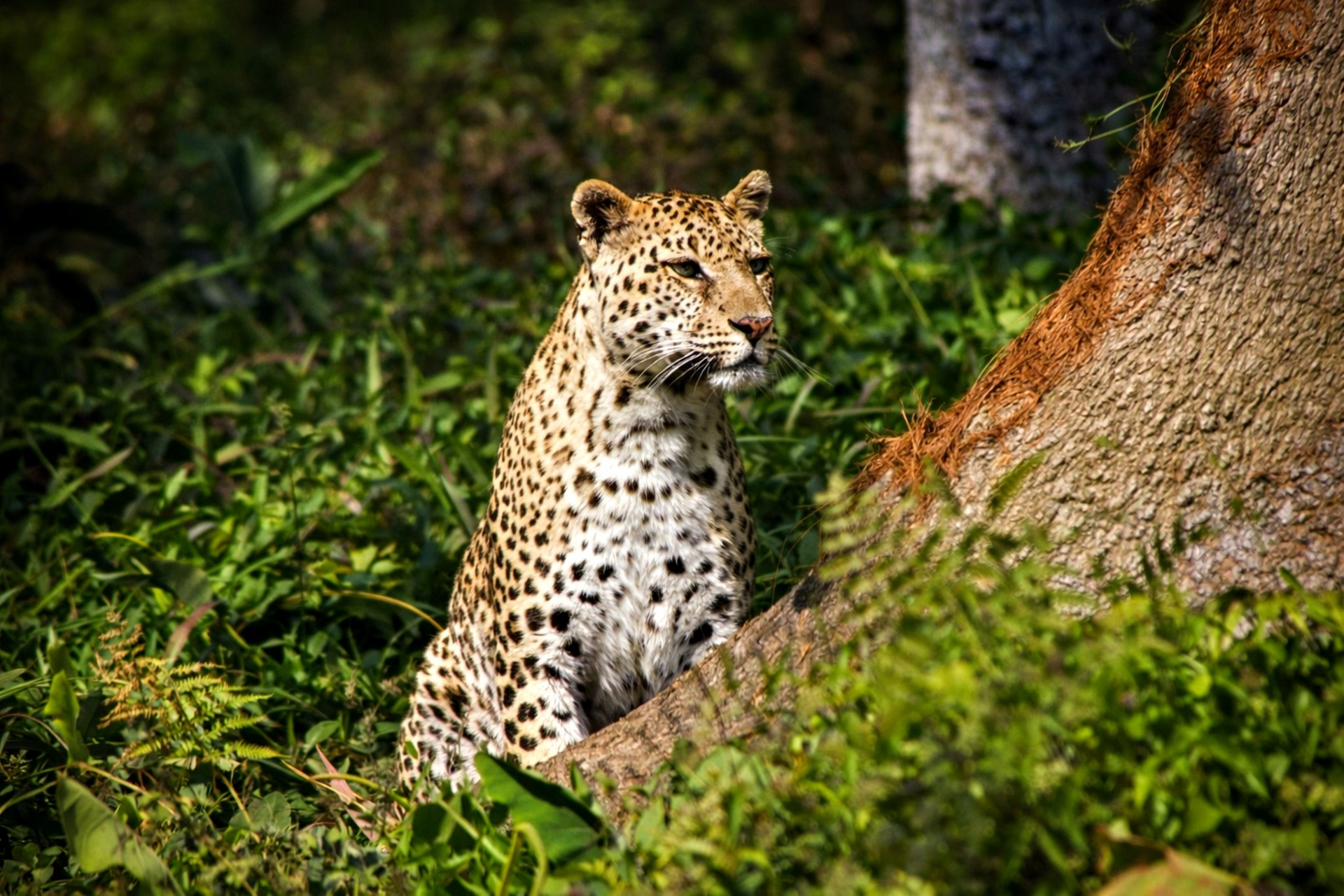
A leopard safari in India offers a chance to see one of the country's most elusive big cats in the wild.
Indian leopards live across many parts of the country, including several famous tiger reserves and national parks. Unlike tigers, leopards often remain hidden in thick vegetation, rocky terrain and forest edges.
This makes leopard sightings unpredictable but highly rewarding.
The best approach is to choose the right destination, stay for enough nights and plan multiple safari drives. Your chances also depend on the season, habitat, recent wildlife movement and the experience of your naturalist and guide.
This guide explains where to go for a leopard safari in India, when to visit, how long to stay and how to build a practical itinerary.
Where Can You See Leopards in India?
Indian leopards occur across a large part of the country.
For safari travellers, some of the most useful destinations include:
| Destination | State | Best For | Suggested Stay |
| Pench National Park | Madhya Pradesh | Leopard and tiger safari | 2 to 4 nights |
| Kanha National Park | Madhya Pradesh | Big cats and diverse wildlife | 3 to 4 nights |
| Bandhavgarh National Park | Madhya Pradesh | Tiger and leopard safari | 3 to 4 nights |
| Tadoba-Andhari Tiger Reserve | Maharashtra | Tiger and leopard viewing | 3 to 4 nights |
| Satpura Tiger Reserve | Madhya Pradesh | Diverse wildlife experiences | 3 to 4 nights |
| Ranthambore National Park | Rajasthan | Tiger and leopard safari | 3 to 4 nights |
| Nagarhole National Park | Karnataka | Southern India wildlife | 3 to 4 nights |
No destination can guarantee a leopard sighting.
Leopards are solitary, secretive animals, and their movements change with season, prey availability and habitat conditions.
Best Places for a Leopard Safari in India
Pench National Park
Pench is an excellent choice for travellers who want to combine leopard viewing with a classic central Indian safari.
The park's forests support tigers, leopards, wild dogs, sloth bears, chital, sambar and many other species.
Pench works particularly well for international travellers arriving through Nagpur.
A 2 to 4-night stay provides time for multiple game drives without making the trip unnecessarily long.
Pench can also be combined with Kanha for a longer central India wildlife itinerary.
Kanha National Park
Kanha offers a larger forest experience and supports a rich range of wildlife.
The park is particularly suitable for travellers who want to see tigers and leopards while also experiencing central India's forest ecosystem.
A 3 to 4-night stay gives you enough time for several safari drives.
Kanha works well as part of a longer itinerary with Pench or Bandhavgarh.
Bandhavgarh National Park
Bandhavgarh is one of India's best-known tiger destinations, but its forests also support leopards.
The reserve is suitable for travellers who want to prioritise tiger sightings while keeping leopard encounters as an additional wildlife opportunity.
Allow around 3 nights for a focused visit.
Tadoba-Andhari Tiger Reserve
Tadoba is an important wildlife destination in Maharashtra.
Its dry deciduous forests provide habitat for tigers, leopards, wild dogs, sloth bears and several deer species.
Tadoba is a practical option for travellers who want a focused big-cat safari without building a long multi-park itinerary.
A 3 to 4-night stay is a good starting point.
Satpura Tiger Reserve
Satpura offers a different experience from many traditional tiger reserves.
Its landscape includes hills, valleys, forests, grasslands and water bodies.
The reserve is also known for a broader range of wildlife experiences beyond conventional jeep safaris.
A 3 to 4-night stay allows enough time to experience the landscape and schedule several wildlife activities.
Ranthambore National Park
Ranthambore is a strong option for travellers combining wildlife with a Rajasthan holiday.
The reserve is famous for its tigers and historic landscapes, but Indian leopards also occur in its dry forests and rocky terrain.
It can fit naturally into itineraries covering Jaipur, Agra and other Rajasthan destinations.
A 3 to 4-night stay is recommended for travellers with a strong wildlife focus.
Best Time for a Leopard Safari in India
The best safari season depends on the destination and the experience you want.
In many central Indian reserves, the dry season can provide good wildlife viewing conditions.
Vegetation becomes thinner, and animals may spend more time around available water sources.
Winter offers more comfortable temperatures and pleasant safari conditions.
The hotter months can be challenging, but thinner vegetation can sometimes make wildlife easier to locate.
| Season | Safari Experience |
| Winter | Comfortable weather and good general wildlife viewing |
| Spring | Increasing temperatures and changing vegetation |
| Summer | Hot conditions but potentially good visibility |
| Monsoon | Many parks close or restrict tourism during the rains |
Always check the current park operating calendar before booking because opening periods and safari rules can vary between reserves.
How Many Days Do You Need for a Leopard Safari?
A short leopard safari can be done in two nights, but longer stays give you more opportunities.
For a focused visit to one reserve, 3 to 4 nights is a practical choice.
For a multi-park itinerary, consider 6 to 10 nights.
For example:
| Itinerary | Duration | Main Focus |
| Pench | 2 to 4 nights | Leopard, tiger and general wildlife |
| Tadoba | 3 to 4 nights | Big cats and dry forest wildlife |
| Pench + Kanha | 5 to 7 nights | Central India wildlife |
| Pench + Kanha + Bandhavgarh | 7 to 10 nights | Intensive big-cat safari |
| Ranthambore | 3 to 5 nights | Tiger, leopard and Rajasthan |
More parks do not automatically mean better wildlife viewing.
Too many transfers can reduce the number of safari drives you have.
For serious wildlife travellers, spending more nights in fewer parks is often the better strategy.
How Many Safaris Should You Book?
There is no number of drives that guarantees a leopard sighting.
However, multiple safaris give you more opportunities to encounter one.
For a leopard-focused trip, consider:
- 2 safaris: Suitable for a short visit
- 4 to 6 safaris: Better for serious wildlife viewing
- 6 to 8 or more safaris: Better for dedicated photographers and wildlife enthusiasts
Several drives also expose you to different weather, light and animal activity patterns.
A leopard that remains hidden during one drive may appear in another zone or at a completely different time of day.
Morning vs Afternoon Safari
Both morning and afternoon safaris can produce leopard sightings.
Morning drives offer cooler temperatures and can coincide with active wildlife movement after the night.
Afternoon drives can become productive as temperatures fall and animals begin moving again.
For the best overall experience, book a combination of morning and afternoon drives rather than choosing only one period.
This also gives photographers different light conditions.
How to Increase Your Chances of Seeing a Leopard
Wildlife sightings can never be guaranteed, but good planning can improve your opportunities.
Stay Longer
More nights mean more safari drives and more opportunities to encounter wildlife.
Choose the Right Habitat
Leopards often use areas with good cover, prey and water.
Your guide can help identify productive parts of the forest based on recent observations.
Use an Experienced Naturalist
An experienced naturalist understands animal behaviour and can interpret signs such as alarm calls, tracks and recent sightings.
Take Multiple Safari Drives
Do not rely on a single morning or afternoon safari.
Several drives provide a much better opportunity to experience the reserve.
Be Patient
Leopards can remain hidden for long periods.
A brief movement in thick vegetation may be the only indication that a leopard is nearby.
Patience is one of the most important qualities for leopard watching.
Leopard Safari With a Tiger Safari
Many travellers do not need to choose between a leopard safari and a tiger safari.
The two experiences can often be combined.
Indian leopards and tigers share several protected landscapes, including Pench, Kanha, Bandhavgarh, Tadoba and Ranthambore.
This makes a combined tiger safari in India and leopard safari particularly practical.
However, the objective should not be to expect both cats on every drive.
Each species uses the landscape differently, and sightings depend on individual animal movements.
Suggested Leopard Safari Itineraries
3-Night Leopard and Tiger Safari
Destination: Pench National Park
Stay: 3 nights
Suggested plan:
- Arrival through Nagpur
- 3 nights near Pench
- 4 to 5 safari drives where possible
- Departure through Nagpur
This is a good option for travellers with limited time.
6-Night Central India Safari
Destinations: Pench and Kanha
Suggested plan:
- 3 nights Pench
- Transfer to Kanha
- 3 nights Kanha
- Multiple morning and afternoon safaris
This provides a broader central Indian wildlife experience.
9-Night Big Cat Safari
Destinations: Pench, Kanha and Bandhavgarh
Suggested plan:
- 3 nights Pench
- 3 nights Kanha
- 3 nights Bandhavgarh
This itinerary suits travellers who want an intensive central Indian wildlife holiday.
However, it involves more road transfers. It should therefore be planned carefully around arrival and departure points.
Leopard Safari Photography Tips
Leopards can be excellent photography subjects, but their behaviour creates challenges.
A long telephoto lens is useful because sightings may occur at a distance.
Other useful equipment includes:
- Spare batteries
- Extra memory cards
- Lens cleaning equipment
- Camera support
- Fast telephoto lens
Avoid flash photography around wildlife.
Follow the guide's instructions and maintain the required distance from the animal.
Do not pressure the driver to approach too closely for a photograph.
A respectful wildlife experience is more important than getting one close-up image.
Safari Zone Selection
Many Indian tiger reserves divide their tourism areas into different zones.
Visitors often ask which zone is best for leopard sightings.
There is no permanently best zone.
Wildlife movement changes according to:
- Season
- Water availability
- Prey movement
- Animal territories
- Weather
- Recent sightings
Instead of focusing entirely on one supposedly "best" zone, plan several safari drives across suitable areas.
Your naturalist can also help interpret recent sighting information during your stay.
Leopard Safari Planning for International Travellers
International travellers should plan more than just safari permits.
Consider the entire journey, including:
- International arrival city
- Domestic flights
- Road transfers
- Safari permits
- Accommodation
- Park entry times
- Number of safari drives
- Buffer time
- Departure connections
For central India, Nagpur is particularly useful for itineraries covering Pench and other nearby wildlife destinations.
A well-designed itinerary should avoid unnecessary backtracking.
For example, combining Pench and Kanha can make more sense than adding a distant park simply to increase the number of destinations.
What to Pack for a Leopard Safari
Pack according to the season.
Useful items include:
- Neutral-coloured clothing
- Comfortable walking shoes
- Warm layers during winter
- Sun protection
- Sunglasses
- Hat
- Binoculars
- Camera equipment
- Reusable water bottle
- Personal medicines
- Small day bag
Avoid bright clothing when possible.
Early morning safaris can be surprisingly cold during winter, while summer drives can become very hot.
Leopard Safari vs General Wildlife Safari
A leopard-focused safari requires realistic expectations.
If your only goal is to see a leopard, no Indian reserve can guarantee success.
A broader wildlife itinerary is often more rewarding.
Instead of focusing only on one species, enjoy the complete ecosystem.
You may encounter:
- Tigers
- Leopards
- Wild dogs
- Sloth bears
- Sambar
- Chital
- Gaur
- Langurs
- Crocodiles
- Hundreds of bird species
This approach makes the safari rewarding even when a leopard remains hidden.
Plan Your Leopard Safari in India
A successful leopard safari depends on choosing the right destination and giving yourself enough time.
For most international travellers, central India offers the easiest way to combine Indian leopard sightings with a broader tiger and wildlife experience.
Pench works well for shorter itineraries and easy access from Nagpur. Kanha suits travellers looking for a deeper forest experience. Tadoba is a strong option for a focused Maharashtra safari, while Ranthambore works well as part of a Rajasthan holiday.
For the best chance of seeing a leopard, plan several safari drives and avoid rushing between too many parks.
Our team can help design a bespoke leopard safari in India around your travel dates, preferred parks, safari interests and overall wildlife goals.
Frequently Asked Questions About Leopard Safaris in India
Which is the best place for a leopard safari in India?
There is no single guaranteed destination. Pench, Kanha, Tadoba, Satpura and Ranthambore all support Indian leopards. The best choice depends on your itinerary, season, safari goals and whether you also want to see tigers.
What is the best time for a leopard safari in India?
The dry season can offer good wildlife viewing because vegetation becomes thinner and animals may concentrate around water. Winter provides more comfortable temperatures, while hotter months can sometimes offer better visibility.
How many days do I need for a leopard safari?
Plan at least two to three nights for a short leopard safari. Three to four nights in one reserve gives you more opportunities. A 6 to 10-night itinerary works well for travellers combining two or three central Indian wildlife destinations.
Can I see tigers and leopards on the same safari?
Yes. Tigers and Indian leopards share several protected landscapes, including Pench, Kanha, Bandhavgarh, Tadoba and Ranthambore. However, sightings are never guaranteed, and each species may use different parts of the habitat.
How many safaris should I book?
Four to six safari drives provide a better opportunity than one or two drives. Serious wildlife photographers may prefer six to eight or more drives. More drives increase your opportunities but cannot guarantee a leopard sighting.
Is Pench good for leopard sightings?
Pench supports Indian leopards alongside tigers, wild dogs, sloth bears and several prey species. It is a strong choice for travellers who want a broader central Indian wildlife experience rather than a leopard-only trip.
Can I combine Pench and Kanha?
Yes. Pench and Kanha work well as a combined central India wildlife itinerary. A five to seven-night trip can provide enough time for several safari drives in both destinations.
Is a leopard safari suitable for first-time visitors to India?
Yes. A leopard safari can easily form part of a first Indian wildlife trip. For international visitors, combining leopard viewing with a tiger safari and other wildlife usually provides a more complete experience.
Final Thoughts
A leopard safari in India is about patience, timing and good planning.
The Indian leopard is widespread, but its secretive behaviour makes sightings unpredictable. Choosing a suitable reserve, staying for several nights and booking multiple safari drives can improve your opportunities.
For international travellers, central India provides some of the most practical options for combining leopards with tigers and other wildlife.
Choose fewer parks, spend more time in each one and let experienced guides work with current wildlife movements.
That approach gives you the best chance of experiencing India's elusive leopard in the wild.